Affiliate disclosure: PureLuxe may earn a commission from qualifying purchases made through the Amazon links in this article, at no extra cost to you.
Where to buy
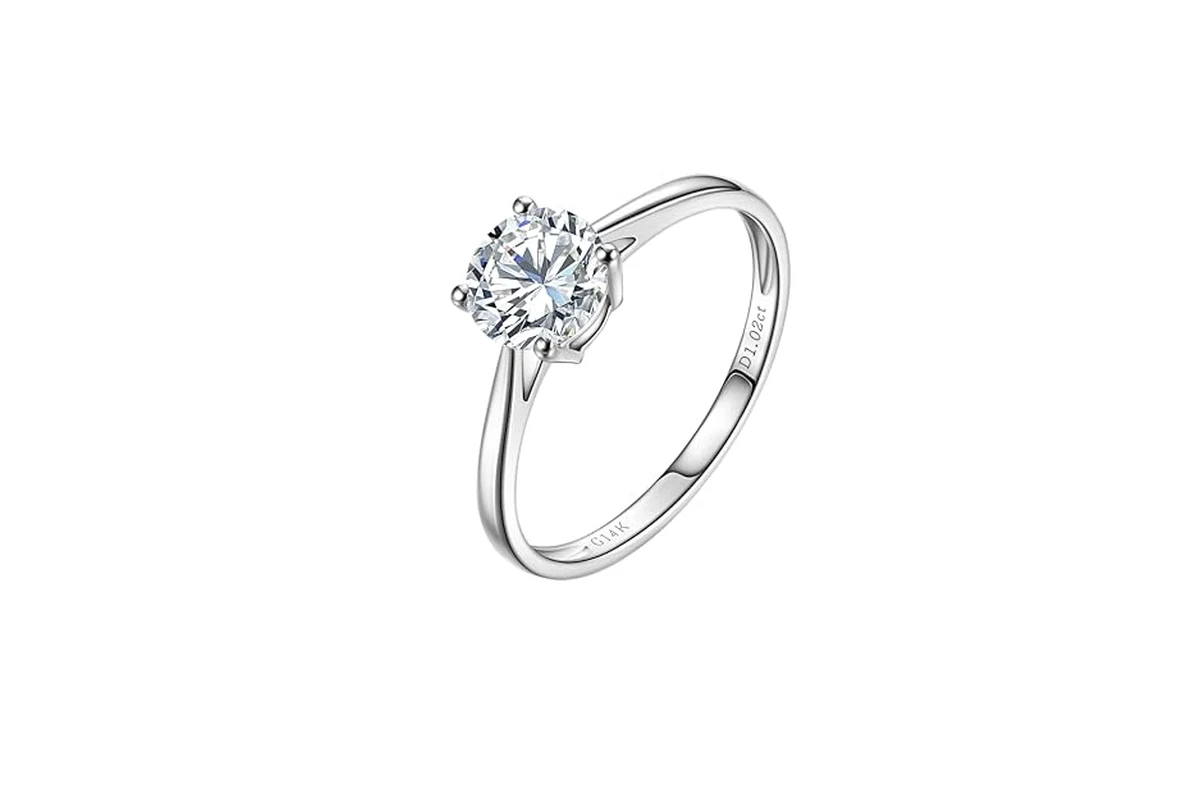
CRITI RORA 1 Carat Lab Grown Diamond Engagement Ring 14K White Gold,IGI Certified Round Cu
An Everyday Solitaire With a Modern Story
An engagement ring is asked to do two very different jobs. It has to hold its own in a proposal moment, and then it has to live on a hand through dishwashing, gym sessions, desk work, and a decade of ordinary mornings. The CRITI RORA 1 Carat Lab Grown Diamond Engagement Ring in 14K white gold is built for that second job as much as the first. It is a classic four-prong solitaire, the most traditional silhouette in the category, paired with a lab grown diamond and a metal that most wearers already know how to care for. If you are shopping for a ring that reads as timeless rather than trendy, this one deserves a closer look, provided you understand exactly what the listing promises and what it does not.
Key details
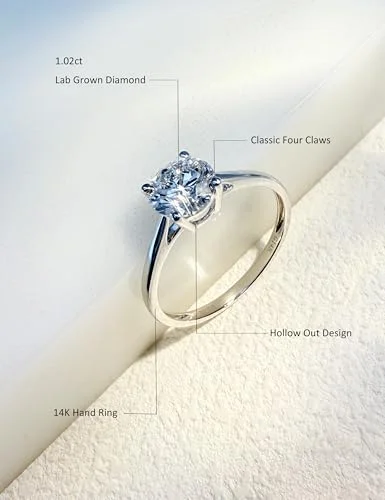
- Center stone: 1 carat round lab grown diamond, IGI certified, E-F color, VS1-VS2 clarity, as listed.
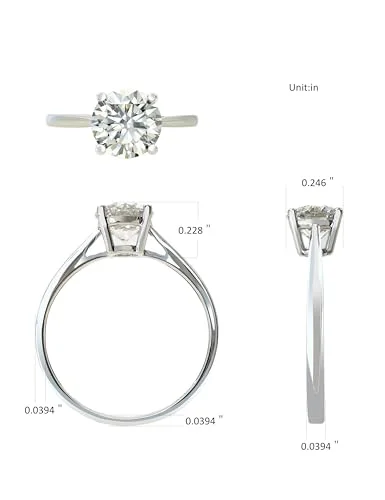
- Metal: 14K white gold, four-prong setting with 0.8mm fine claws.
- Design: solitaire with a single round center stone, described as suitable for simple wedding ring styling and daily wear.
- Sizing: standard US sizes 5 through 9.
- Presentation: positioned as a proposal ring, wedding pair ring, or anniversary gift.
- Service terms: 24-hour customer service and a 30-day return and exchange window, per the listing.
- Environmental note: the brand states zero conflict diamonds and a reduction in environmental impact compared with mined diamond production.
Materials and craftsmanship
Start with the stone, because it is the part of the purchase most buyers overthink and under-inspect. A lab grown diamond is a real diamond in every chemical, physical, and optical sense. It is carbon crystallized in a laboratory rather than extracted from the earth. That matters for two reasons. First, you are not choosing between a diamond and a diamond simulant; you are choosing between two origins of the same material. Second, resale value behaves differently. Mined diamonds have a long, if inconsistent, secondary market. Lab grown stones trade at a steeper discount on resale, and you should buy one because you want the look and the certification at a given budget, not because you expect it to appreciate. Treat it as a beautiful object, not an investment.
The listed grade is E-F color and VS1-VS2 clarity, which sits in a strong range. E-F is near colorless, meaning most wearers will not detect warmth against white gold in normal light. VS1 and VS2 describe very slight inclusions that are typically invisible to the naked eye and difficult to spot even under a loupe. The listing says IGI certified, and IGI is a recognized grading laboratory for lab grown diamonds. What you want to confirm is that the certificate number on the report matches the number inscribed on the diamond’s girdle, and that the report you receive is for this specific stone, not a generic sample. That single check is the difference between buying a graded diamond and buying a promise.
The setting is 14K white gold with four prongs and 0.8mm fine claws. Four prongs is the classic choice for a round brilliant because it leaves more of the stone visible than a six-prong setting while still holding it securely. The trade-off is that four prongs expose slightly more of the girdle, so the ring rewards a wearer who is mindful of knocking it against hard surfaces. The 0.8mm claw measurement suggests a finer, more delicate prong profile than a heavy commercial setting. Finer claws look elegant and let more light reach the stone, but they also demand a jeweler’s eye during annual inspections. Ask a bench jeweler to check prong tension once a year, and immediately after any hard impact.
White gold is an alloy of gold and white metals, plated with rhodium for that bright finish. Rhodium plating wears over time, particularly on the underside of the band and the edges of the prongs, and most wearers have it replated every one to three years depending on wear. That is normal maintenance, not a defect, but it is a cost to plan for. Fourteen karat gold is a sensible middle ground: harder and more scratch resistant than 18K, with enough gold content to feel substantial on the hand.
Still deciding?
CRITI RORA 1 Carat Lab Grown Diamond Engagement Ring 14K White Gold,IGI Certified Round Cu
Wearing it day to day
A 1 carat round solitaire on a 14K white gold band is one of the most wearable combinations in fine jewelry. The stone is large enough to read clearly across a room but not so large that it catches on sleeves or feels top-heavy. On a size 7 finger, which is a common reference size and the one named in this listing, a 1 carat round sits proportionally well on most hands, covering a good portion of the finger without overwhelming it. If your ring size is at the smaller end of the 5 to 9 range, the same stone will appear slightly larger relative to the finger; at the larger end, slightly more modest. Neither is wrong, but it is worth trying a similar carat weight in person before committing.
Sizing matters more than most first-time buyers expect. Fingers change size with temperature, salt intake, and season, and a ring that fits perfectly in a warm showroom can spin in winter. Aim for a fit that slides over the knuckle with slight resistance and sits snugly at the base of the finger. If you are between sizes, size up and consider sizing beads later rather than sizing down and risking discomfort. Resizing a solitaire with a plain band is usually straightforward, but a ring with any channel-set or pavé detail on the shank is harder to resize cleanly. This design is a straightforward solitaire, which is a point in its favor for future adjustments.
For care, the routine is simple and worth keeping. Remove the ring for heavy lifting, gardening, and contact sports. Clean it at home with warm water, a drop of mild dish soap, and a soft brush, focusing on the underside of the stone where hand lotion and soap residue collect and dull the sparkle. Avoid chlorine and abrasive cleaners, which can pit gold alloys over time. Store it separately from harder gemstones so the diamond does not scratch other pieces; a diamond is the hardest natural material and will happily mark softer stones and metals in a shared jewelry box.
Who it suits
This ring suits a buyer who wants a traditional solitaire silhouette without the mined diamond price structure. It fits well for a proposal where the recipient prefers clean, classic lines over halos, three-stone designs, or vintage-inspired detailing. It also works as an anniversary ring or a wedding band companion for someone who wants a single, well-cut stone as the focal point. If your budget is the primary constraint and you want the largest, cleanest-looking stone for the money, lab grown is the most efficient path, and this listing’s E-F and VS1-VS2 grades are a strong place to start.
Look elsewhere if
Look elsewhere if you specifically want a mined diamond for emotional or resale reasons, or if you are buying as an investment. Lab grown stones do not hold value the way mined stones sometimes do, and no amount of certification changes that market reality. Look elsewhere if you want a bezel setting for maximum security in a physically active life, since a bezel encloses the girdle and protects it far better than prongs. Look elsewhere if you prefer warm metals; this is white gold, and yellow or rose gold will read very differently on the hand. And look elsewhere if you need a size outside 5 to 9, since the listing does not indicate custom sizing.
Alternatives to consider
If you want the same look with more protection, a bezel-set or half-bezel solitaire in 14K white gold offers similar visual weight with less risk of snagging and prong damage. If you want a different metal entirely, a yellow gold or rose gold solitaire in the same carat weight changes the entire mood of the ring and can make a near-colorless stone read warmer and more vintage. If you are open to a different stone, a 1 carat moissanite solitaire costs considerably less and offers strong brilliance, though its optical character differs from diamond and it is not the same material. And if you want a slightly larger presence, stepping to a 1.25 or 1.5 carat lab grown stone in a similar setting is a common next step, though you should compare face-up size rather than carat weight alone, since cut proportions affect how large a stone appears.
Before you buy
Verify the IGI certificate before anything else. Ask the seller to confirm that the report number on the certificate matches the laser inscription on the diamond’s girdle, and that the report describes the exact stone you will receive. Check the metal stamp inside the band; 14K white gold should be marked accordingly, and a missing stamp is a reason to pause. Confirm the return window in writing, since the listing states 30 days, and understand whether return shipping is covered. If you are buying as a gift, confirm the size before ordering, because resizing a ring after the return window can add cost and delay.
Finally, plan for the long term. Budget for rhodium replating every one to three years, and schedule an annual prong inspection with a jeweler you trust. Keep the certificate and any appraisal documentation in a safe place, both for insurance and for your own records. A solitaire like this is designed to be worn for decades, and with basic care, the stone and the setting will hold up. The goal is not to baby the ring, but to know what it needs so it can be worn without worry.
Pros and cons
- + Classic four-prong solitaire in 14K white gold with a 1 carat round lab grown diamond
- + Listed E-F color and VS1-VS2 clarity are strong grades for the category
- + IGI certification is stated, giving buyers a verifiable grading document to check
- + Straightforward solitaire design is easier to resize and maintain than detailed shanks
- + 30-day return window and 24-hour customer service are listed
- – Lab grown diamonds have limited resale value compared with mined stones
- – Four-prong settings expose more of the girdle than bezel settings
- – White gold requires periodic rhodium replating to maintain its bright finish
- – Sizing is limited to US 5 through 9 with no custom sizing indicated
Verdict: A well-specified classic solitaire for buyers who want a near-colorless, certified lab grown diamond in 14K white gold without the mined diamond premium. Verify the IGI report number against the stone’s inscription and confirm the return terms before you buy.
Ready to buy
CRITI RORA 1 Carat Lab Grown Diamond Engagement Ring 14K White Gold,IGI Certified Round Cu